Add from Hugging Face
Paste a GGUF repo. Run it.
Sparky checks your RAM, GPU and disk, picks the best model that fits, then downloads, verifies and runs it: chat, images, short video and voice. All on your machine.
Pick your Mac’s memory and what you want to run.
Best fit
Best.
rigspark up gpt-oss:20b
Then rigspark chat. How Sparky ranks every model ›
Images and video run through your own ComfyUI; RigSpark fetches and verifies the weights.
Not just a checker
One app. Sparky picks the model, you use it.
Sparky picks the best model your machine can hold, downloads it, checks its SHA-256 and starts it on 127.0.0.1. You chat, generate or talk in the same app.
Explain to a ten-year-old why the sky is blue at noon but orange at sunset.
The sky is blue at noon because sunlight scatters blue light more than other colors. At sunset, sunlight travels through more air, scattering blue light away and leaving reds and oranges. This makes the sky appear orange when the sun is low.
Chat, code and write with the best model your memory holds, on Ollama, llama.cpp, MLX, LM Studio or BitNet.
rigspark up qwen3:14b

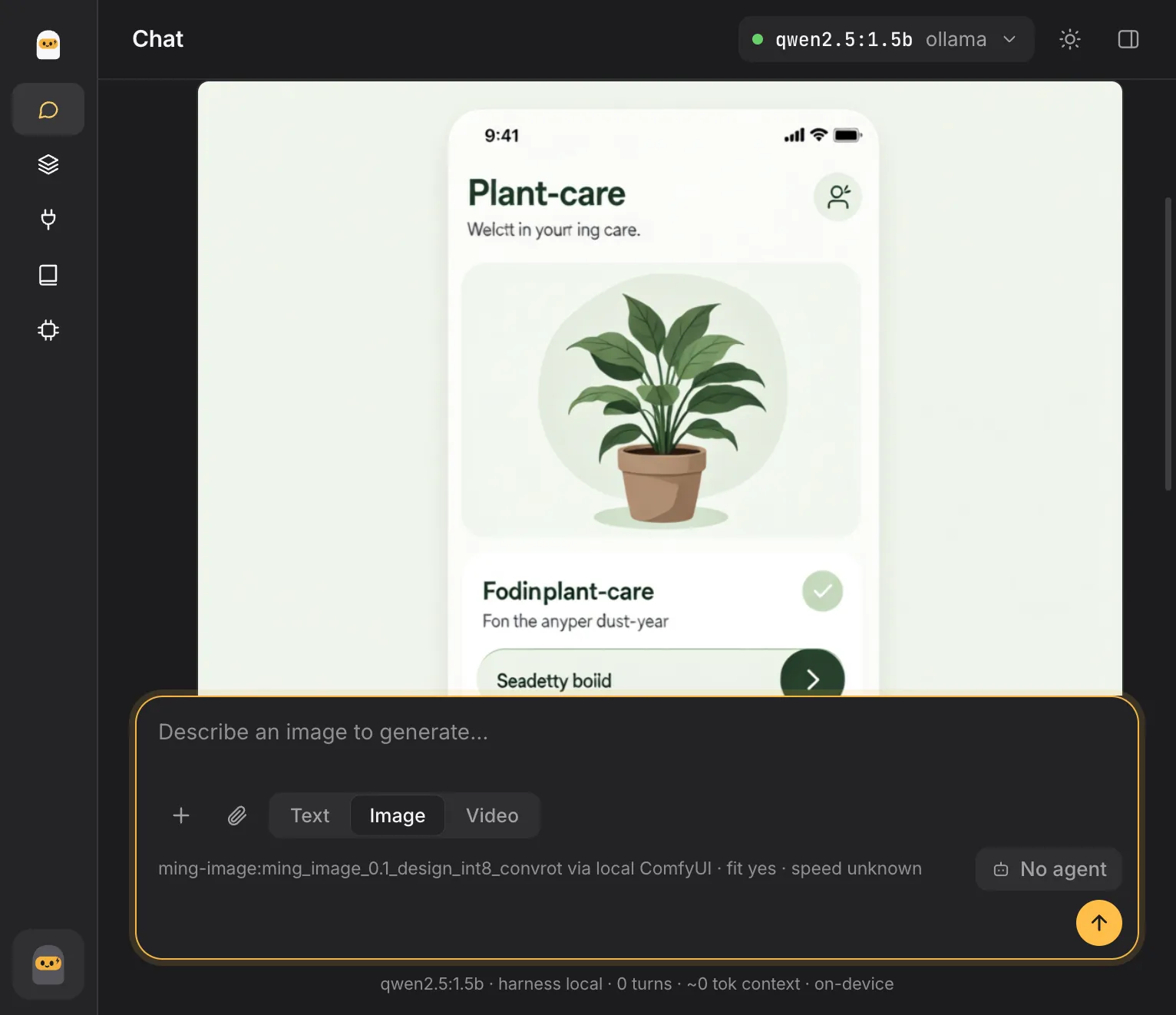
Flux, Qwen-Image and Ming design mockups, right in the chat. Thumbnail, wallpaper or square.
rigspark generate image --prompt "…"
Wan 2.2 text-to-video clips from a prompt, on your machine.
rigspark generate video --prompt "…"
Quiet room, the kettle hums / Little lights on my machine / Every word I write stays here / Safe and close and only mine
It runs at home, it runs at home / Every idea stays my own / Lights are low, the night is long / It runs at home
Spoken replies with Kokoro or Chatterbox, dictation with Whisper, and songs with sung vocals from ACE-Step.
Models › Voice
Text is ranked across the whole catalog. Images and video run through your own ComfyUI. Spoken replies need Apple silicon; PCs attach a local speech server.
Three moods. One honest answer.
This is how Sparky picks. Every model in the catalog gets a verdict sized to your machine, with the reason it was given.
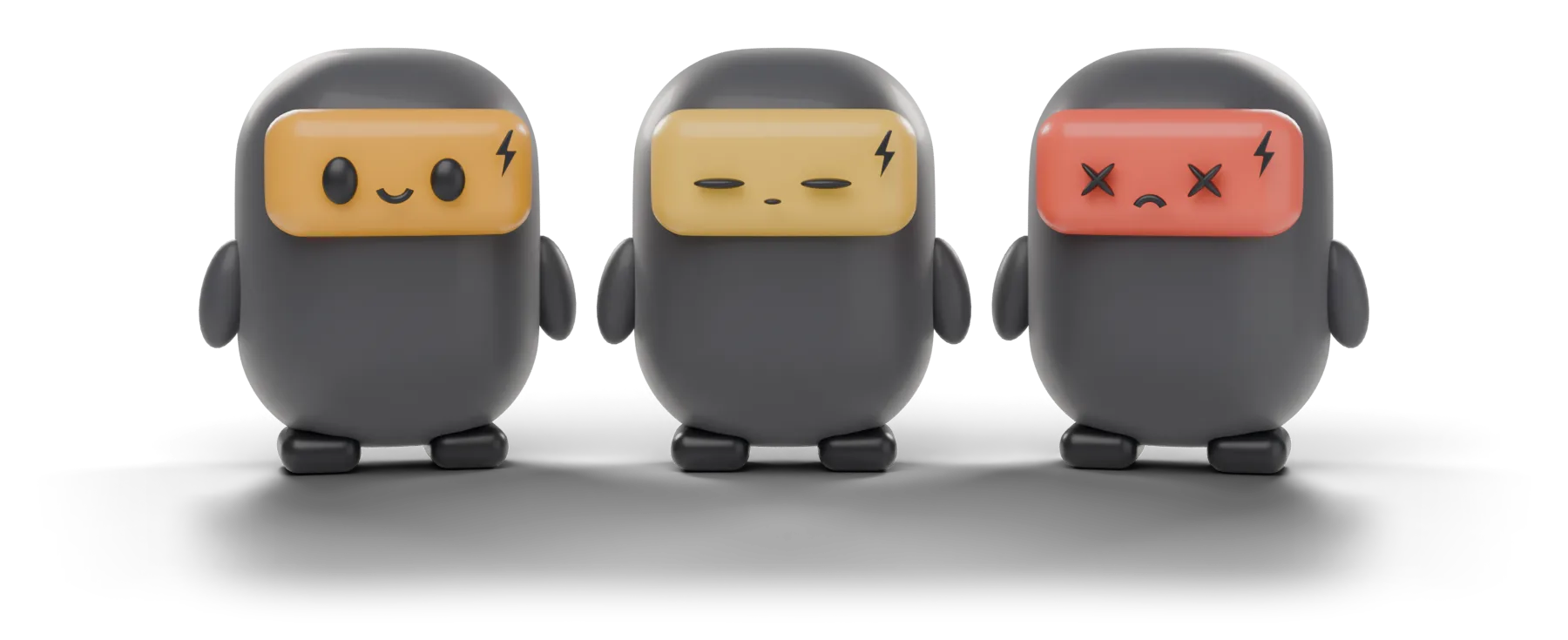
Fits in memory and meets bandwidth. You get an estimated tok/s range.
Fits, but memory bandwidth limits speed. You still see the estimate.
Won’t fit. You see the binding reason and skip the download.
How it works
rigspark recommend sizes each model’s weights and KV cache against your machine and ranks the offline catalog. Models that can’t fit are listed with the reason.
$ rigspark recommend
Ranked local LLMs for arm64/darwin (34.0 GiB ram usable):

Rank  Model              Params  Est. Mem  Verdict   Est. tok/s
   1  qwen3:30b-a3b         30B  19.9 GiB  ✓ yes    55.6–103.3
   2  kimi-vl-a3b           16B  10.7 GiB  ✓ yes    55.6–103.3
   3  qwen3:32b             32B  21.6 GiB  ⚠ slow      5.2–9.7
   4  deepseek-r1:32b       32B  21.3 GiB  ⚠ slow      5.2–9.7
   5  gemma3:27b            27B  18.6 GiB  ⚠ slow     6.2–11.5
   ⋮

Run the top pick:  rigspark up qwen3:30b-a3b

Won't fit (14):
  ❌ deepseek-r1:671b  (ram-bound)
  ❌ llama3.3:70b      (ram-bound)
unknown; nothing is invented.rigspark can-run qwen3:8b gives one verdict and exits non-zero only on no, so it works as a CI gate.rigspark up pulls, verifies the weights and serves on 127.0.0.1. Then rigspark chat.rigspark recommend output and the browser workspace. Unmute for sound.Paste a GGUF repo. Run it.
Install, click once, chat. llama.cpp built in.
UI/UX mockups with Ming Design, plus FLUX.1 schnell and Wan 2.1.
Runs through your own ComfyUI. Ming Design INT8 is tested on a 36 GiB Apple Silicon Mac; CUDA is unverified. Text inside generated images may be garbled.
0–100. rigspark doctor names your bottleneck.
Privacy
Most “can I run it” tools guess. Sparky refuses to. Every figure is sourced, or it says unknown.
recommend, can-run and doctor make zero network calls. Same catalog, same answer.
Unsourced throughput is printed as unknown. Models are still ranked by weights, never dropped.
up and switch check pulled weights against the catalog digest and refuse anything that doesn’t match.
Model servers and the workspace bind to 127.0.0.1 with host-header checks.
KV-cache memory math with GQA-correct geometry. Re-rank at --context N or size a quantized cache with --kv-cache.
rigspark migrate carries memory to a bigger model. Preview with --dry-run.
Reusable personas and instruction blocks, stored locally as markdown.
Attach local stdio or loopback MCP servers. Tools run with your approval.
Agent-run code renders charts and images right in the conversation.
Activate a verified catalog snapshot without replacing the app. Rollback included.
Ollama, llama.cpp and MLX with full lifecycle, BitNet on CPU, LM Studio attach-only.
Rendered markdown, scrollback and first-token timing in your shell.
up, switch and down show each stage as done, failed or unconfirmed.
Ollama is an excellent runtime. RigSpark sits on top of it and four others, picks what to run, then runs it.
Ollama, llama.cpp, MLX or LM Studio
Sparky decides, your runtime runs
Community Edition · Available now
RigSpark Community Edition is free, open source and available now for macOS and Windows. The desktop app bundles llama.cpp, so the first model runs right after install. No Node.js, Python or compiler needed.
The Mac app is signed with a Developer ID and notarized by Apple, so it opens like any other app.
If Windows SmartScreen warns about the installer: More info → Run anyway. Signed Windows builds are on the way (code signing policy).
Command line
brew install shashankswe2020-ux/tap/rigsparkcargo binstall rigspark-cli rigspark-guicargo install rigspark-cli --locked --bin llmup --bin rigspark && cargo install rigspark-gui --lockeddocker pull ghcr.io/rigspark/rigspark:latestArchives are unsigned. Verify them against SHA256SUMS. On macOS, clear quarantine with xattr -dr com.apple.quarantine rigspark-*. The container is an older CLI image that sees only the container’s resources.
Figures are RigSpark’s offline estimates, not benchmarks.
Install RigSpark and run rigspark recommend. It detects your GPU, VRAM, RAM and free disk, ranks every catalog model with a yes, slow or no verdict and estimated tokens per second, and lists the models that won’t fit with the reason. rigspark can-run <model> checks a single model.
At Q4_K_M and default context, RigSpark estimates about 5.3 GiB for Llama 3.1 8B, 9.9 GiB for Qwen3 14B, 21.6 GiB for Qwen3 32B and 45.5 GiB for Llama 3.3 70B. Longer contexts add KV cache on top.
Yes. Apple Silicon GPUs share unified memory with the CPU, so RigSpark sizes models against system memory and auto-selects MLX for models with an MLX build, then Ollama, then llama.cpp.
Yes. With your own ComfyUI running on 127.0.0.1, rigspark generate image or rigspark generate video installs pinned, SHA-256 verified FLUX.1 schnell or Wan 2.1 weights and runs a built-in workflow. You can also switch the chat composer to Image or Video in rigspark gui. Paid ComfyUI Partner nodes are refused and nothing is sent to the cloud.
Recommendations, can-run and doctor make no network calls and use a verified local catalog. The explicit catalog --update action downloads a signed snapshot; normal startup does not. Model servers and the browser workspace bind to 127.0.0.1 only.
Yes. RigSpark 2.0 renamed llmup. The llmup command remains as a compatibility alias, and the crates moved from llmup-* to rigspark-*. See the changelog for moving your data directory.
RigSpark
Free and open source. MIT licensed. Native Rust.